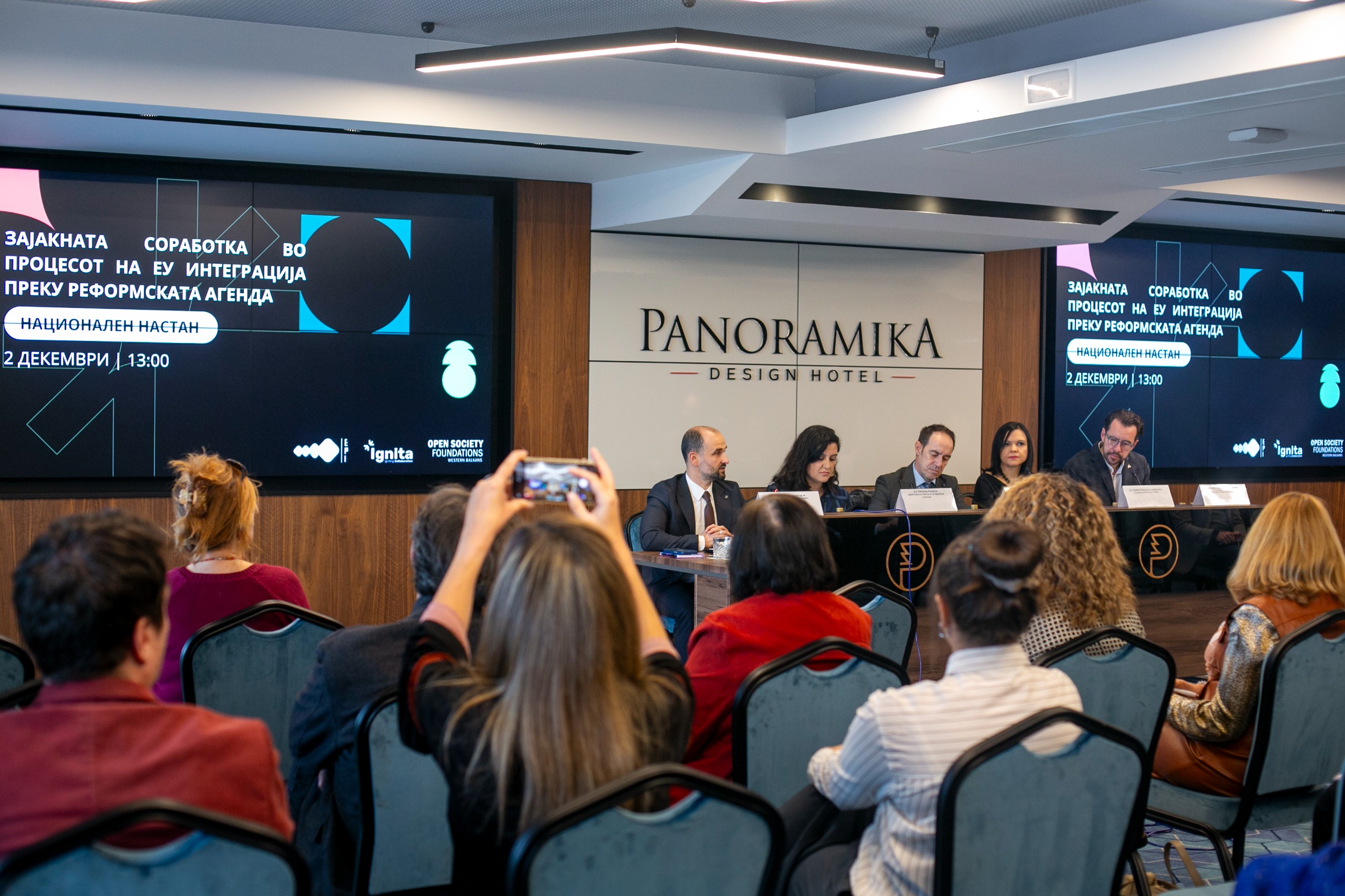
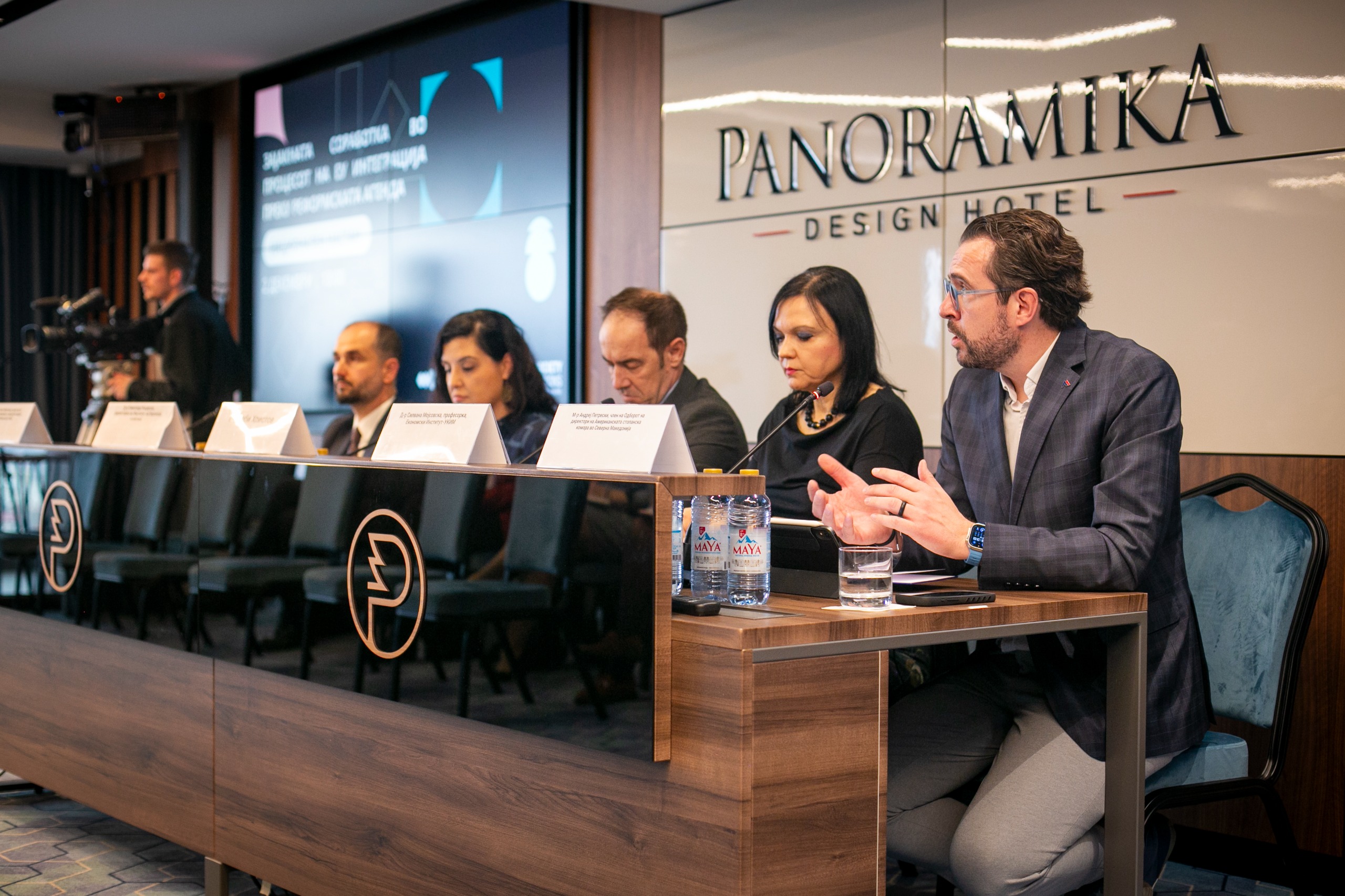
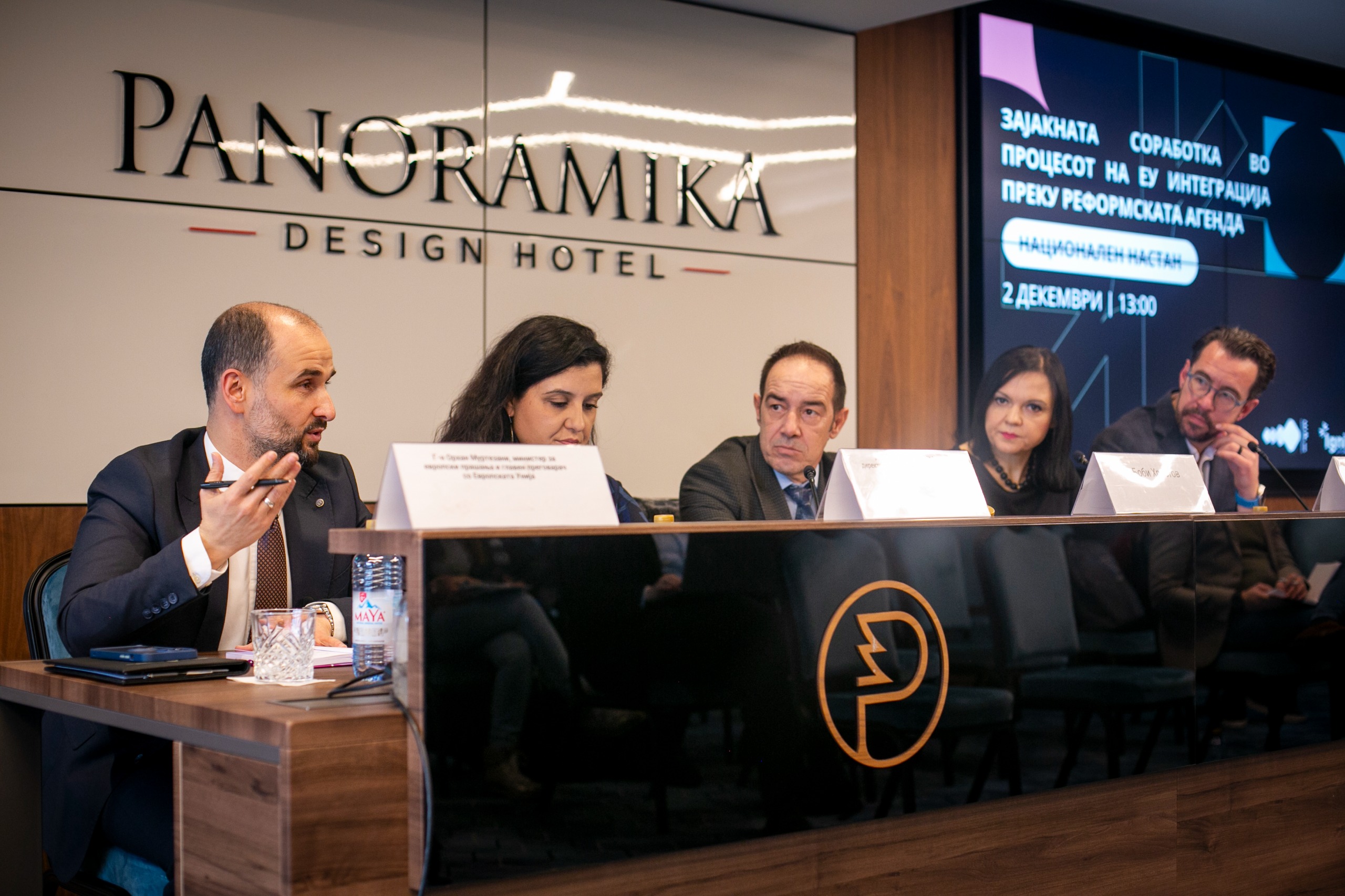
Minister of European Affairs, Orhan Murtezani, today participated in a panel discussion titled “Enhanced Cooperation in the EU Integration Process through the Reform Agenda”, a national event organized by the European Policy Institute – Skopje (EPI), which is dedicated to advancing the dialogue on the Western Balkans Growth Plan.
In his opening address, MEP Murtezani addressed the significance of the Reform Agenda and the understanding of reform processes as a political necessity and a deeply personal commitment: “Reforms only work when they are connected to the everyday lives of citizens. They must create institutions in which people have trust, economies that generate opportunities and societies that are inclusive and just. Reforms are more than a strategic necessity - they are a measure of our maturity as a state. They reflect our ability to build resilient institutions, to ensure efficient and transparent democratic governance and to demonstrate to our citizens that dedicated efforts today lead to tangible progress and a better quality of life in the future.” – stressed MEP Murtezani.
The following is the integral text of MEP Murtezani’s address:
Dear attendees,
Let me first express my gratitude to the European Policy Institute – Skopje (EPI) for organizing this important discussion. EPI continuously provides a platform for informed and critical debate on European integration and this event is no exception. Such discussions are essential, not only as exercises for policy exchange, but also as a reminder of the shared responsibility we bear for the advancement of the European future of our region.
The question you asked me is truly essential: how can the Reform Agenda and the Growth Plan for the Western Balkans be used to create real and lasting change? For me, the answer lies in understanding reforms as a political necessity and a deeply personal commitment. Reforms only work when they connect with the everyday lives of citizens. They must create institutions in which people have trust, economies that generate opportunities and societies that are inclusive and just. Reforms are more than a strategic necessity – they are a measure of our maturity as a state. They reflect our ability to build resilient institutions, to ensure effective and transparent democratic governance, and to demonstrate to our citizens that dedicated efforts today lead to tangible progress and a better quality of life in the future.
The reform agenda is at the heart of these efforts, I would say of this joint undertaking. It requires us to address long-standing weaknesses in our public administration, judicial system, and regulatory frameworks. But reforms are not just about correcting what is not working. They are about building a culture of accountability and responsibility, where governance is based on trust, inclusiveness, and a focus on results that will improve the lives of citizens.
In this context, the Growth Plan is a transformative addition to the reform process. It links our efforts to the broader regional context, making reforms not only a national necessity but also a regional opportunity. Its four pillars: market integration, connectivity, human capital, and governance are deeply political, but also practical. They provide the basis for real change, with measurable impacts on businesses, citizens and institutions. But let us not forget that no plan, no matter how ambitious, can succeed without real cooperation. Cooperation, in this context, is not a political slogan. It must be discipline, a willingness to work in good faith, to share knowledge and expertise and to see the success of our neighbours not as competition but as progress for all.
For North Macedonia, this principle of partnership is not theoretical. It shapes our approach to reforms, our regional relations and our aspirations for a European future. But partnership also requires mutual responsibility. While we work tirelessly to meet EU standards, the EU also needs to respect its obligations. The enlargement process must remain a credible and achievable goal, not only for us, but for the entire region.
What makes the Growth Plan particularly powerful is its dual function: it fosters economic development while strengthening the momentum of the accession process. For North Macedonia, this is particularly significant. The promise of shared prosperity through market integration fits perfectly with the reforms we are implementing, from modernizing infrastructure to creating an environment where businesses can thrive. But I would like to emphasize: The Growth Plan is not a substitute for reforms; it is a catalyst for deeper and more sustainable fundamental changes.
The success of the Reform Agenda and the Growth Plan also depends on communication. Reforms and economic development can take root with
only when citizens understand their benefits and have confidence in the process. This means that we need to act in an interconnected, coordinated and unified way. To work with civil society organizations, with young people, with the media, and at the same time to ensure that all levels of government, from local to national and regional, act in sync. It is not enough to simply pass laws or conduct negotiations; it is necessary to achieve concrete results and for them to be clearly and transparently communicated to all stakeholders.
For North Macedonia, the challenge is to translate these ambitious plans into a reality that will resonate at every level. Whether it is promoting the independence of the judiciary, improving educational standards or strengthening regional connectivity, each reform must be presented as a step towards a fairer, more prosperous and more secure future.
That is why I believe that reforms are not an end goal, they are a continuous process. They require perseverance, patience and a firm belief in the power of change. The path of reform is not linear or easy and is definitely not without moments of frustration. But we must constantly remind ourselves why we are following it. We do so because we believe in the goal of a North Macedonia that will not only become a member of the European Union, but also a state that will proudly stand among its neighbors, strengthened by the thorny path it has traveled and the lessons it has learned. Thank you.