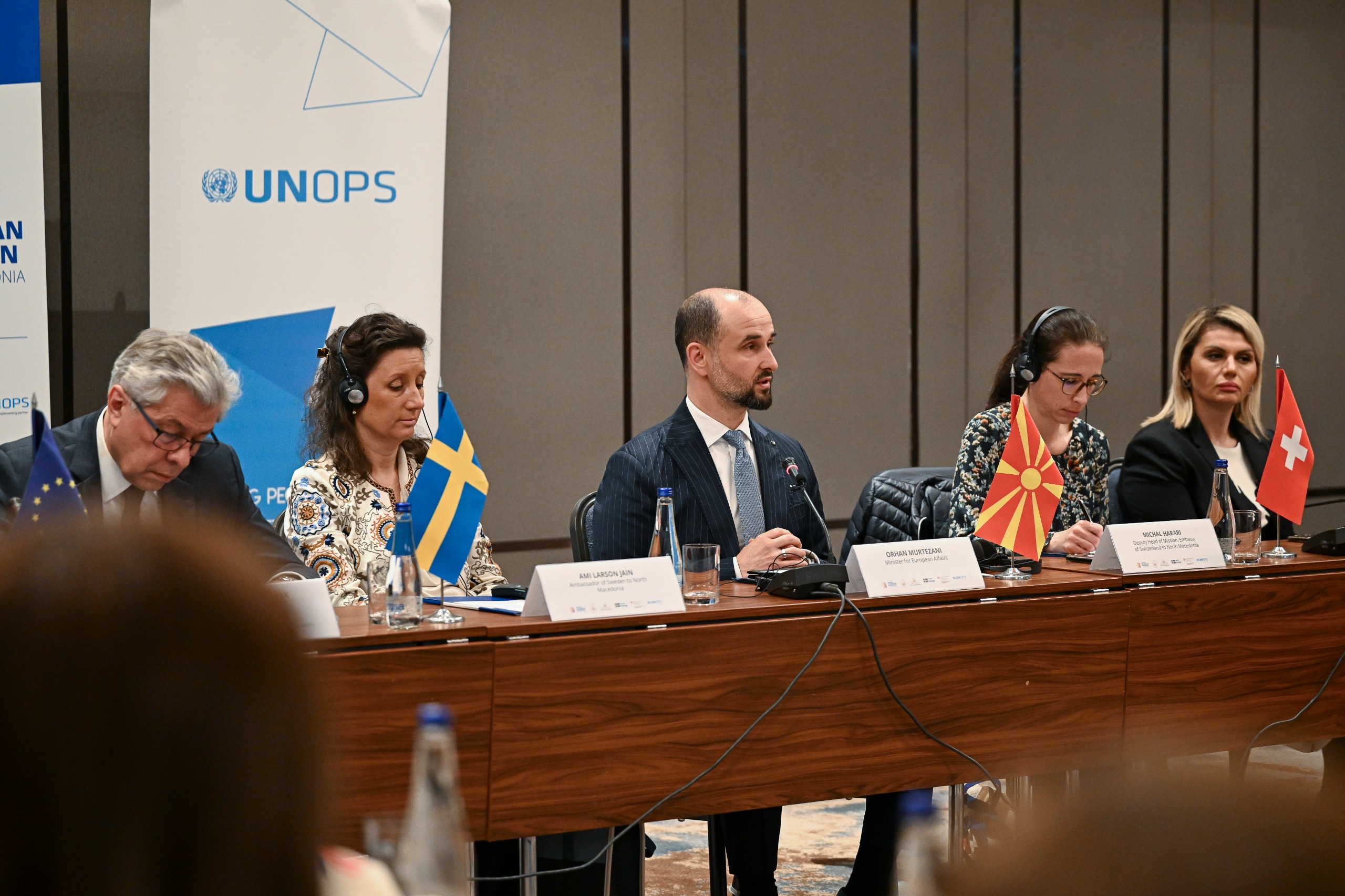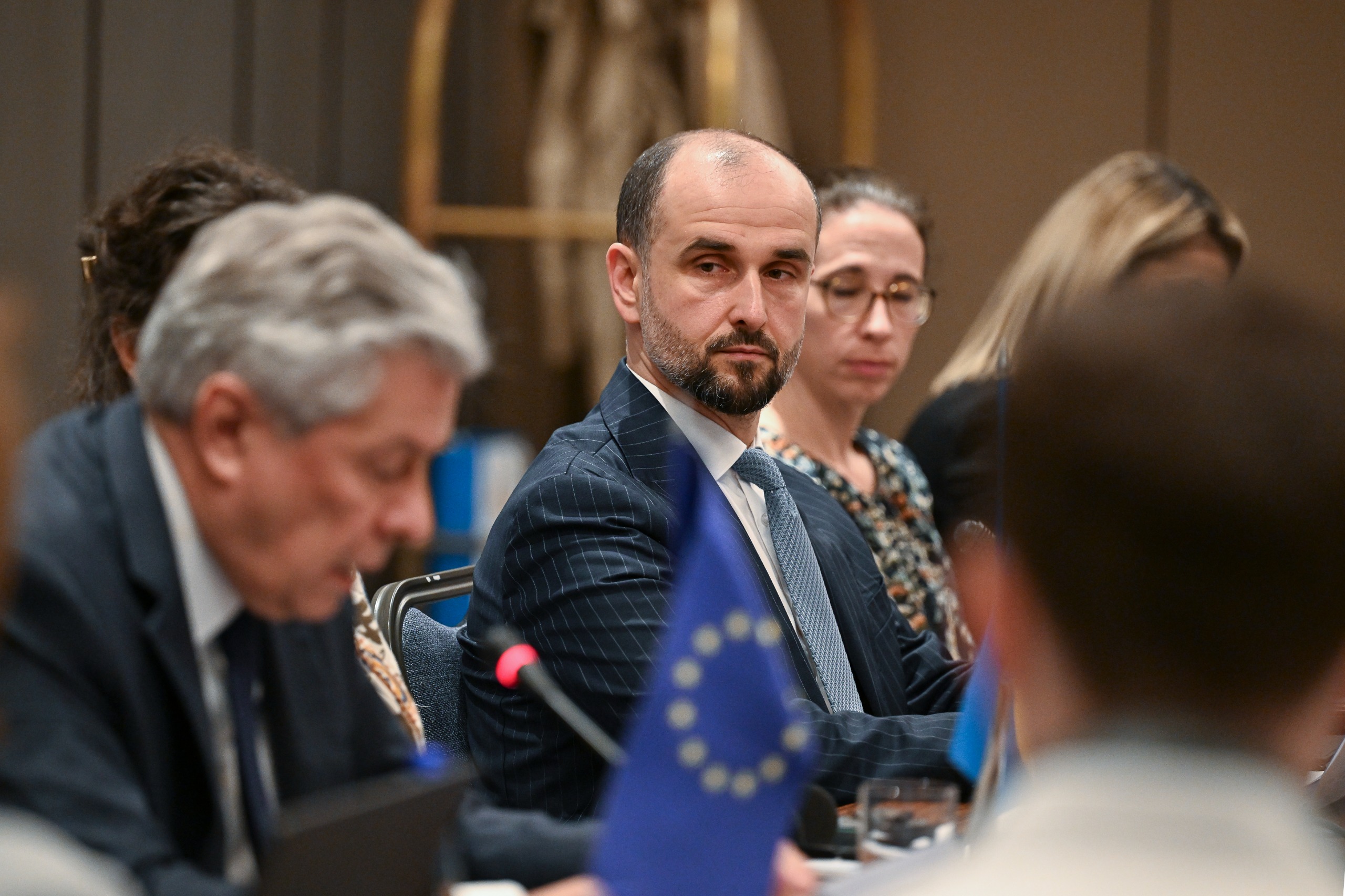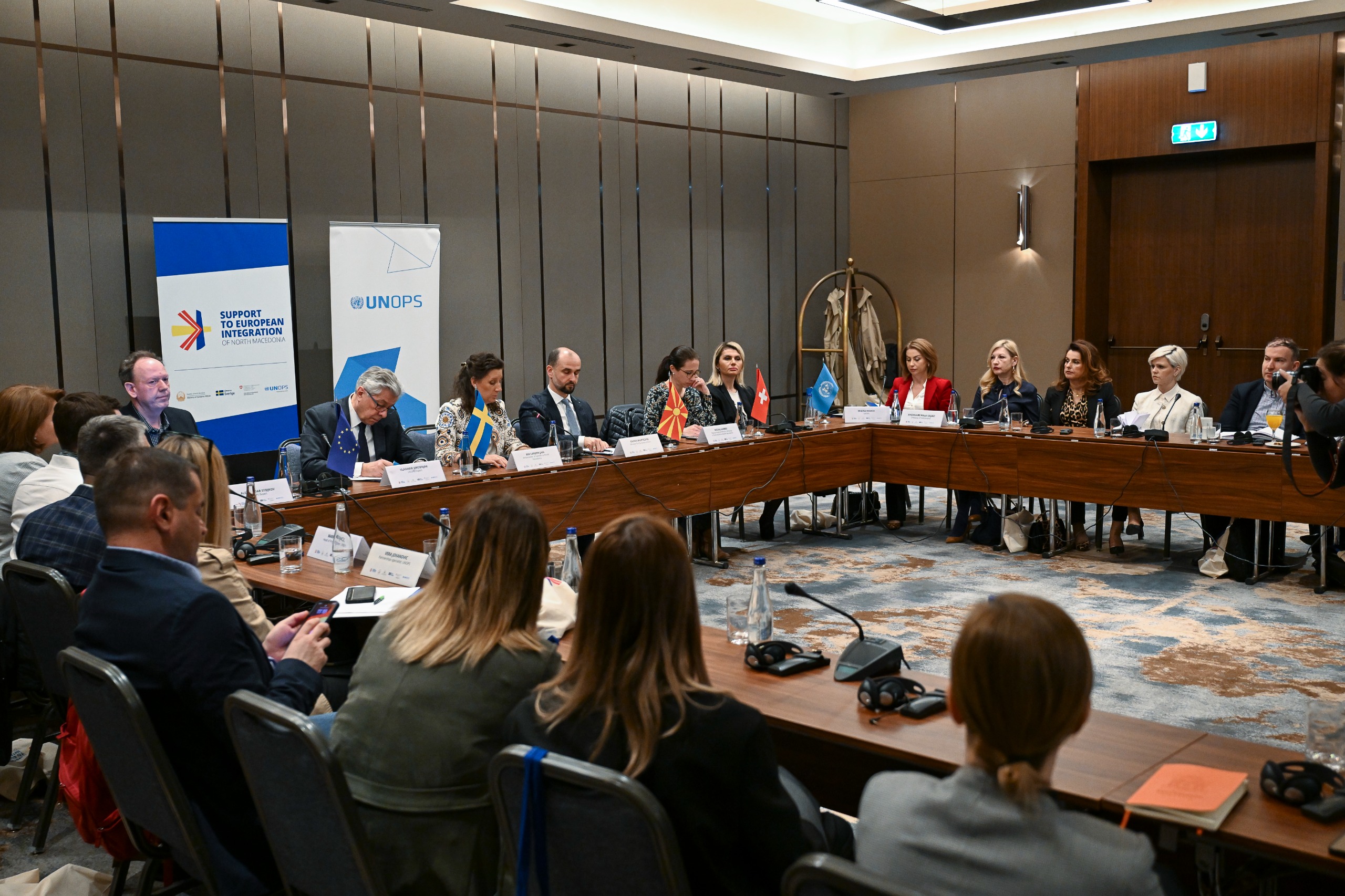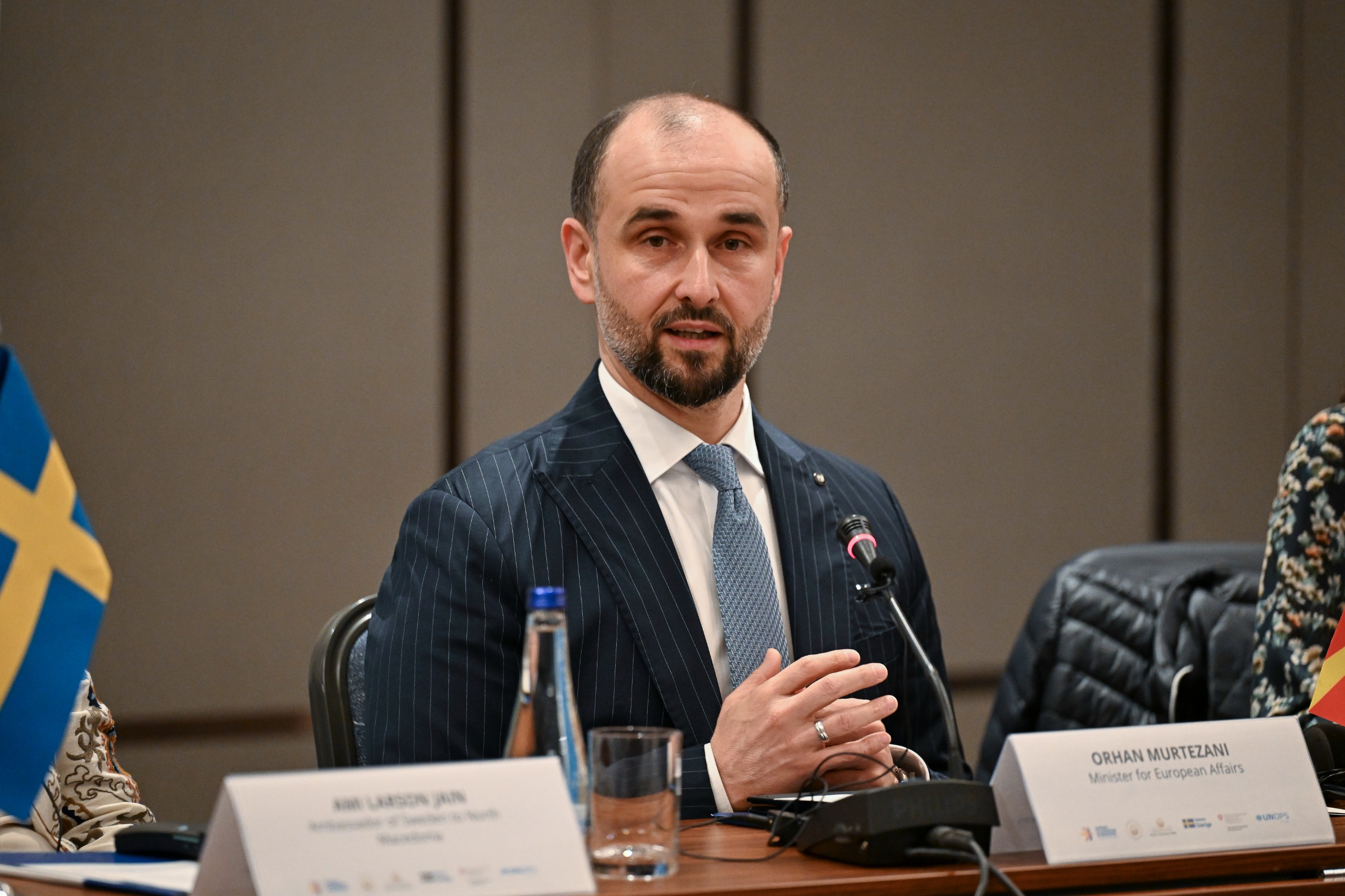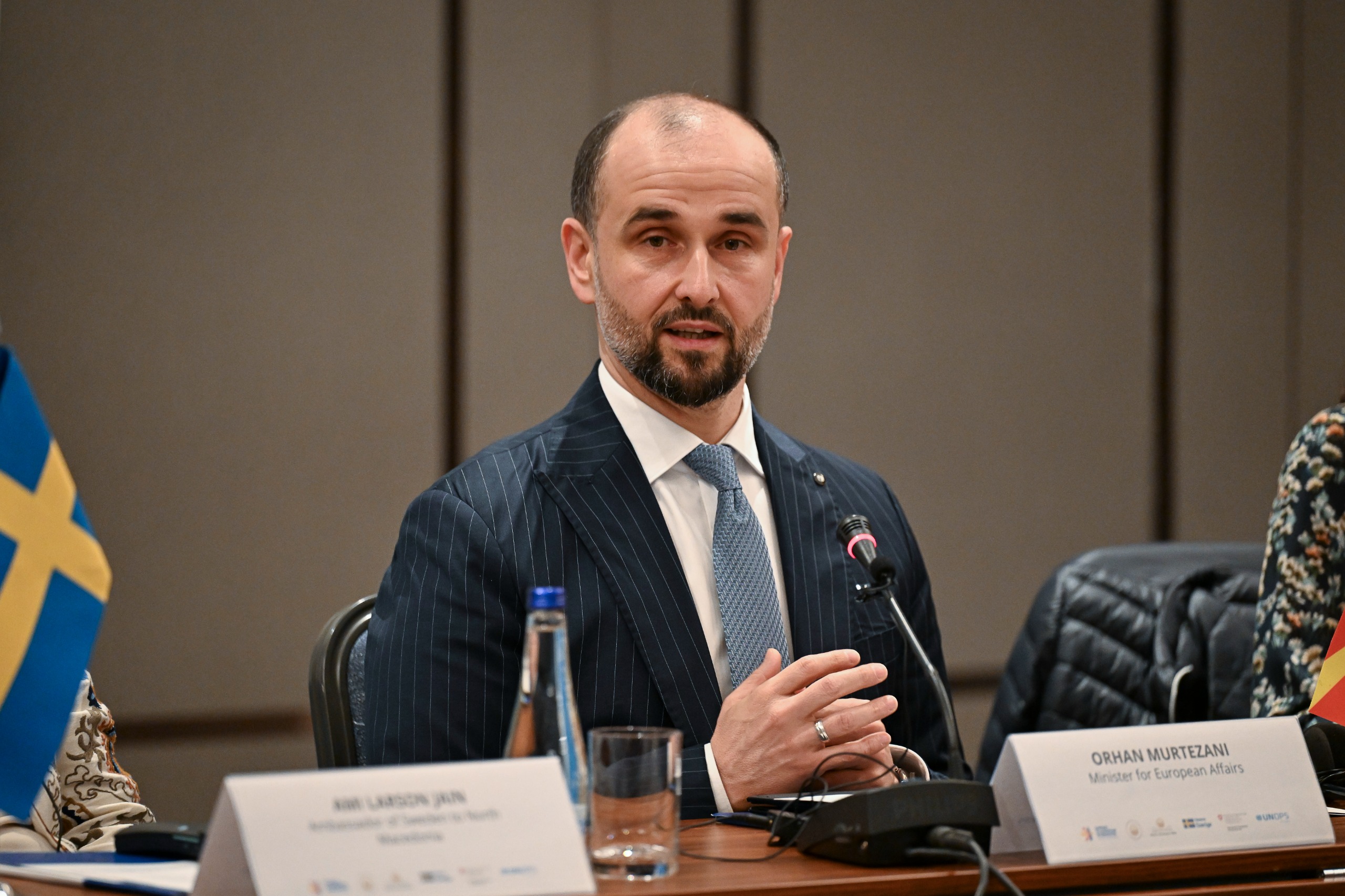
Minister for European Affairs, Orhan Murtezani, delivered a welcome address at the workshop titled “Orientation towards the Future: Business Opportunities and Challenges within the Western Balkans Reform Agenda 2024-2027”. The workshop was attended by business leaders, private sector representatives, owners and managers of small and medium-sized enterprises, representatives of industry associations and other private sector stakeholders.
In his address, Minister Murtezani highlighted the key benefits and challenges of the Reform Agenda 2024-2027 for North Macedonia for the business sector. He indicated that reforms, aligned with the EU Growth Plan for the Western Balkans, are crucial for boosting the country’s economic progress, improving the business environment, strengthening the energy and digital transitions, and strengthening the rule of law. The Minister also highlighted the opportunities for private sector transformation and the importance of actively involving the business community in reform processes.
“The Reform Agenda and the Growth Plan represent an opportunity for the transformation of the private sector in our country. Your ideas and thoughts are crucial in this period of transformation. Then, let us work together to translate the Reform Agenda into real, sustainable growth for businesses in North Macedonia,” said MEP Murtezani.
The following is the integral speech of Minister Murtezani:
====================================================================================================
Dear business leaders, esteemed representatives of the business community, ladies and gentlemen,
Today’s workshop “Orientation towards the Future: Business Opportunities and Challenges within the Western Balkans Reform Agenda 2024-2027” marks a milestone in our joint efforts to create the economic picture of our country. It is not just about theoretical political frameworks, but about the tangible reality that will define the operating environment for private sector development and contribute to economic growth in the future.
The 2024-2027 Reform Agenda for North Macedonia, largely aligned with the EU Growth Plan for the Western Balkans, is designed to boost our economic progress. It is important to clarify the financial framework: The Growth Plan provides a total of €6 billion for the entire Western Balkans region, of which €2 billion in grants and €4 billion in concessional loans. Specifically, North Macedonia will receive approximately €750 million through this instrument, and the funds will be distributed depending on progress in implementing key reforms. Furthermore, 2/3 of the amount foreseen for the country will be allocated to the Investment Framework of the Western Balkans Joint Fund for investment projects in sectors such as transport, energy, digitalization and human capital. The total value of the proposed investments is around €1.2 billion, and the funds expected from the Reform Agenda are calculated at a level of around €440 million. The government is committed to investing in infrastructure with mature projects that will boost the country’s economic growth.
These reforms, which focus on areas such as digital transformation, improved governance and strengthened rule of law, are not just a bureaucratic formality. They are key to creating a more competitive and attractive business environment. For example, as outlined in the concept note for this workshop, by December 2025, 100 administrative procedures should be available online. This is a clear example of the reforms and their benefits for the private sector.
Also, the effects of the reforms related to the integration of the electricity market and RES (renewable energy sources) are taken as summary results and the evaluation showed that an investment in 0.8 GW of RES would increase GDP by 2% annually in the medium term and generate 6,000 full-time jobs. The estimated impact of the e-services measure will increase gross value added by 0.46% and GDP by 0.40%, which represents a significant contribution to economic efficiency and productivity. The combined result of the two measures on skills mismatch and adult education estimates an improvement in productivity by 0.55%, leading to a similar increase in GDP. The e-customs measure envisages a reduction in customs clearance time by 2-4% and faster processing of declarations, which will contribute to an increase in trade volumes.
Furthermore, the focus on digital transformation within the Reform Agenda is crucial. The adoption of measures in the areas of e-commerce, digital services and cybersecurity is not just a technological advance, but a fundamental change towards increasing efficiency, productivity and competitiveness. For small and medium-sized enterprises, this means access to new markets and more efficient operations, which gives them the opportunity to compete globally.
However, we must be honest about the revenue collection and fiscal autonomy, municipalities will have a greater opportunity to invest in projects that are a priority for the local community, in line with the needs of its citizens.
This workshop aims to achieve several key outcomes: to raise awareness of the role of local government in reforms, to improve understanding of available support, and to strengthen dialogue between local and national authorities.
Today's event is an opportunity to exchange ideas and strengthen our partnerships. I invite you to an open and constructive discussion. Let this workshop be a place where new ideas are born and our commitment to a prosperous future for all citizens is strengthened.
I believe that through joint work, dedication and vision, we can realize our goals. Thank you for your attention and I wish you a successful and fruitful work at today's workshop.
Thank you.